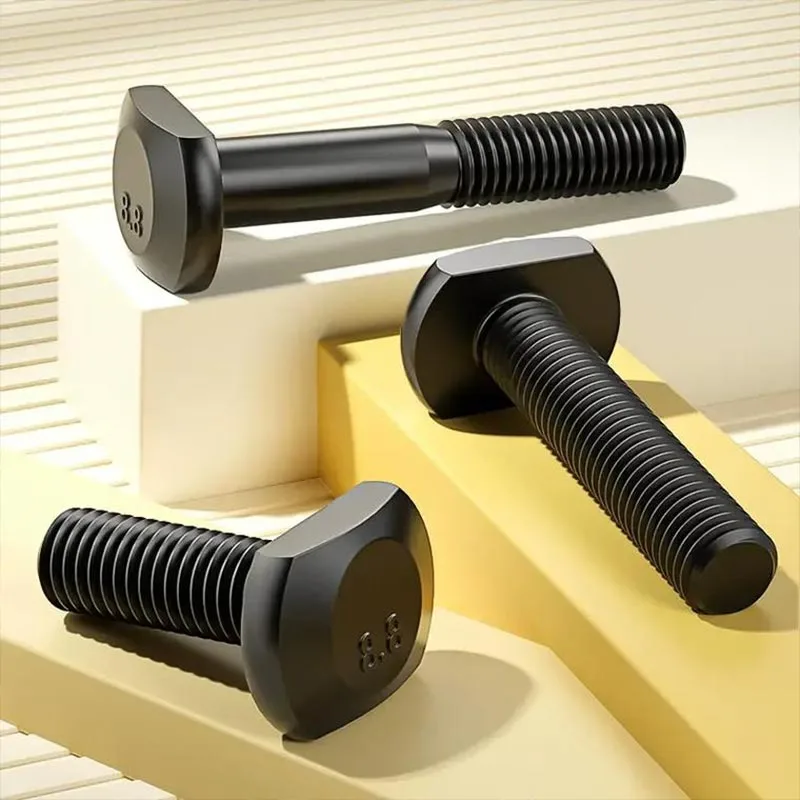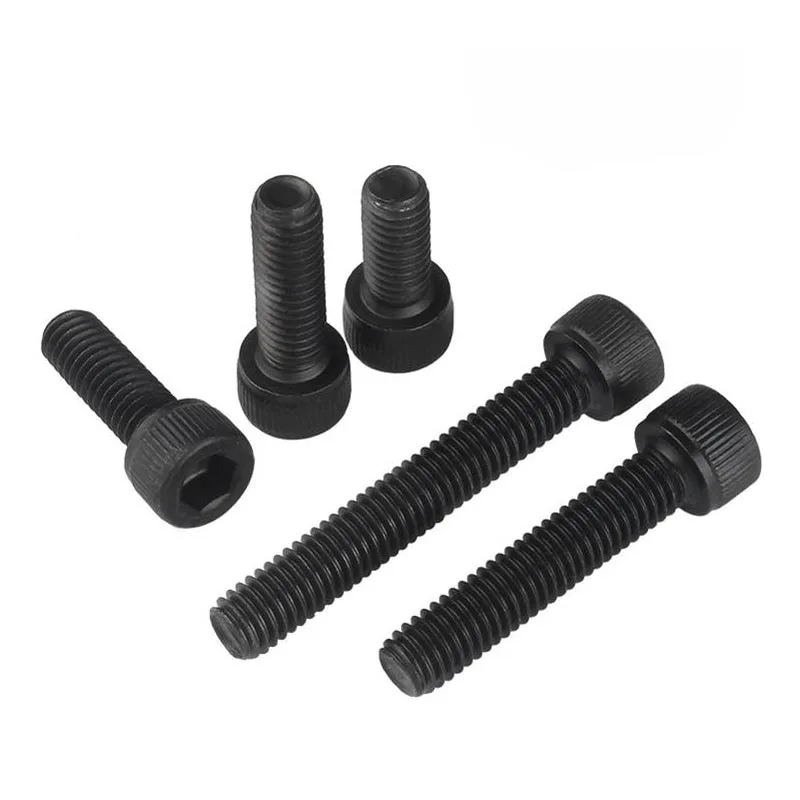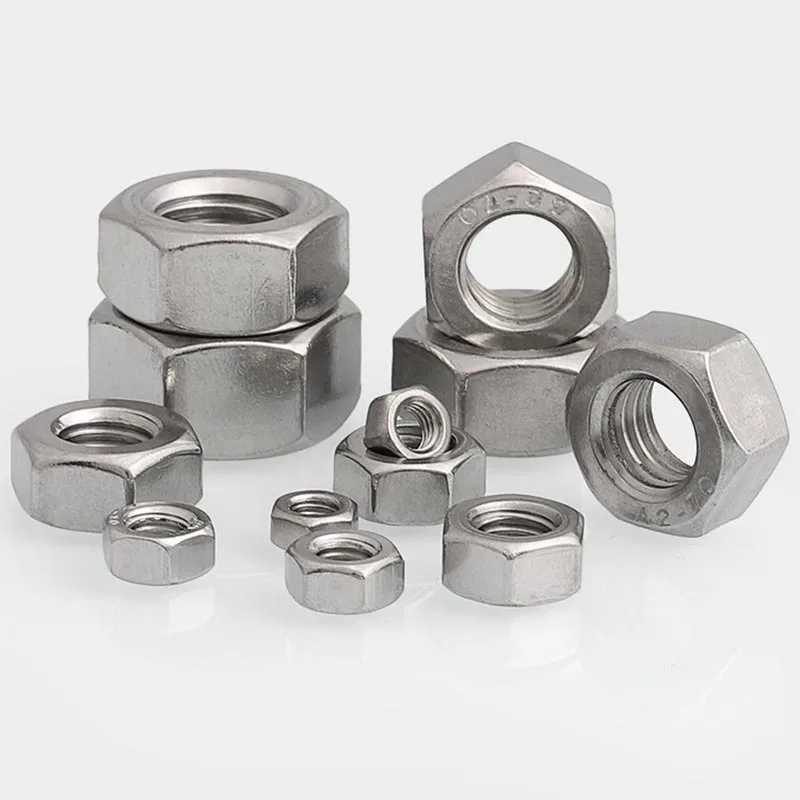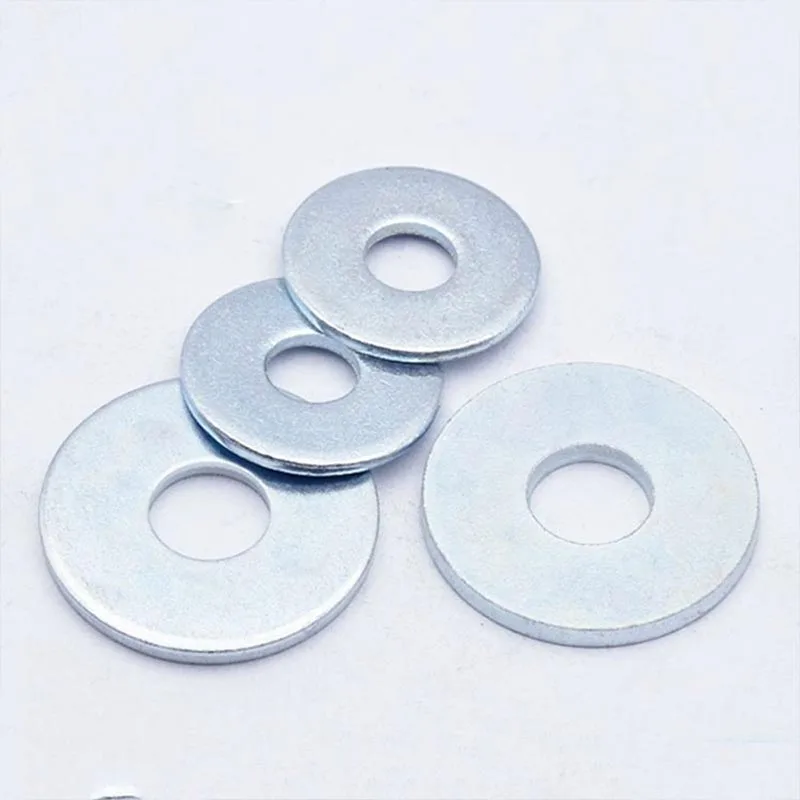
YS STEEL focuses on high-strength and precision-grade fasteners that perform reliably under high torque, repeated load cycles, and harsh environmental conditions. The product range covers metric and imperial sizes, with custom thread lengths, head styles, and surface treatments available on request.
Different joint designs require different fastener types. The most common categories supplied by YS STEEL include:
Selecting the correct material grade directly affects fastener performance, service life, and safety. YS STEEL manufactures machinery fasteners from the following common materials:
Hardness ranges are tightly controlled. For example, a class 8.8 bolt typically has a hardness of 22–32 HRC, while class 12.9 bolts range from 39–44 HRC. YS STEEL verifies hardness, tensile strength, yield strength, elongation, and impact toughness through in-house testing and third-party laboratories.
The table below summarizes key product parameters for YS STEEL machinery fasteners. These values serve as a general reference; actual dimensions and properties depend on the selected standard and grade.
| Fastener Type | Common Standards | Diameter Range | Length Range | Material Grades | Tensile Strength | Coating Options | Typical Use |
|---|---|---|---|---|---|---|---|
| Hex head bolt | ISO 4014, DIN 931, ASME B18.2.1 | M6–M64 / 1/4"–2-1/2" | 10 mm–600 mm | 8.8, 10.9, 12.9, A2-70, A4-80 | 800–1,220 MPa | Zinc, HDG, black oxide, PTFE | Engine mounts, gearboxes, frames |
| Socket head cap screw | ISO 4762, DIN 912, ASME B18.3 | M3–M36 / #0–1-1/2" | 6 mm–300 mm | 12.9, A2-70, A4-80 | 1,220 MPa | Black oxide, zinc-nickel, plain | Machine tools, robotics, dies |
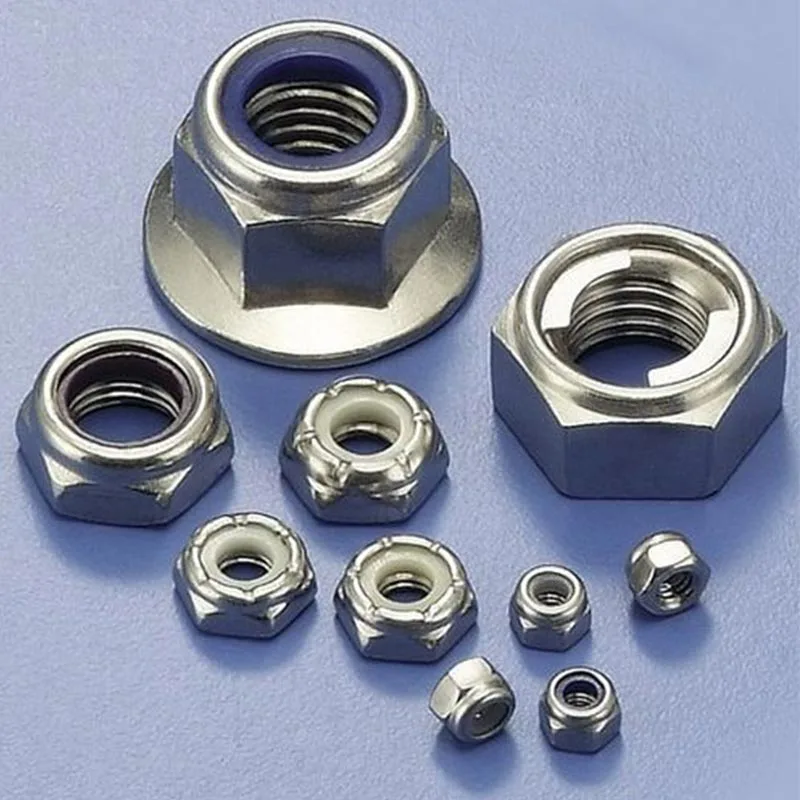
| Hex nut | ISO 4032, DIN 934, ASME B18.2.2 | M6–M64 / 1/4"–2-1/2" | — | 8, 10, 12, A2, A4 | Proof load up to 1,200 MPa | Zinc, HDG, plain | General assembly, flange joints |
| Heavy hex nut | ISO 4033, ASME B18.2.2 | 1/2"–3" | — | 2H, DH, A563 Grade C/DH | 1,034–1,200 MPa | HDG, plain, black | Structural steel, cranes, bridges |
| Flat washer | ISO 7089, DIN 125, ASME B18.22.1 | M5–M64 / 3/16"–3" | Thickness 1 mm–8 mm | Carbon steel, stainless | — | Zinc, HDG, plain | Load distribution, surface protection |
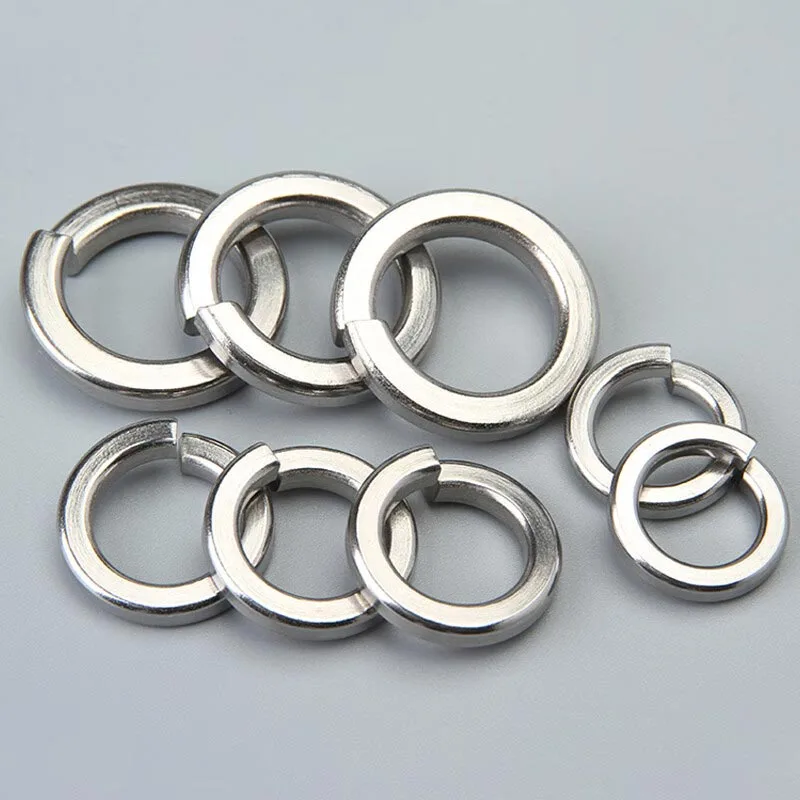
| Spring washer | DIN 127, GB/T 93 | M5–M48 | — | Spring steel 65Mn, stainless | — | Zinc, phosphate, plain | Vibration resistance, locking |
| Threaded rod | DIN 975, ASME B18.31.3 | M6–M64 / 1/4"–2" | 1 m, 3 m, custom | 4.8, 8.8, 10.9, A2, A4 | 400–1,000 MPa | Plain, zinc, HDG | Tension systems, anchor bolts, U-bolts |
| Dowel pin | ISO 8734, DIN 6325, ASME B18.8.2 | 1 mm–50 mm | 5 mm–200 mm | Alloy steel, stainless | Hardness 58–62 HRC | Plain, black oxide | Alignment, shear load transfer |
| Flange bolt | ISO 4162, DIN 6921 | M5–M20 | 10 mm–120 mm | 8.8, 10.9, A2 | 800–1,040 MPa | Zinc, black, HDG | Automotive, pumps, compressors |
| Carriage bolt | DIN 603, ASME B18.5 | M6–M20 / 1/4"–3/4" | 12 mm–300 mm | 4.8, 8.8, A2 | 400–800 MPa | Zinc, HDG | Wood-to-metal, guarding, conveyors |
Surface finishing extends service life and prevents galvanic corrosion. YS STEEL machinery fasteners are available with the following coatings:
YS STEEL maintains strict quality control throughout the manufacturing process. All machinery fasteners are produced from certified raw materials with full traceability. Each batch includes a material test certificate according to EN 10204 3.1 or 3.2. In-house testing covers dimensional inspection, hardness testing, tensile testing, thread gauging, and surface coating thickness measurement. Third-party inspection by SGS, TUV, or BV can be arranged before shipment.
Custom manufacturing capabilities include:
YS STEEL supports both prototype and high-volume production, with typical lead times of 15–25 days for standard sizes and 25–45 days for custom items, depending on order quantity and specification complexity.
Machinery fasteners from YS STEEL are used across a wide range of industries:
Q: What are the most common grades for machinery fasteners, and how do I know which one to use?
A: The most common metric grades are 8.8, 10.9, and 12.9 for bolts and screws, with 8, 10, and 12 nuts. Grade 8.8 is medium carbon steel with a minimum tensile strength of 800 MPa and is suitable for general machinery. Grade 10.9 provides 1,000 MPa tensile strength and is used in high-load joints like engine mounts and structural connections. Grade 12.9 offers the highest strength at 1,200 MPa but has reduced ductility and greater sensitivity to hydrogen embrittlement, so it should be used only where high clamping force is needed and coating processes are controlled. For imperial fasteners, Grade 5 and Grade 8 are common, with Grade 8 equivalent to metric class 10.9. Always match the nut grade to the bolt grade to avoid premature failure.
Q: How do I choose between metric and imperial machinery fasteners?
A: The choice depends on the equipment origin, existing tooling, and design standards. Metric fasteners are standard in Europe, Asia, and most modern machinery built to ISO standards. Imperial (inch) fasteners are common in North America, particularly in older equipment and ASME-designed systems. Do not mix metric and imperial threads, as thread pitches and flank angles differ. For new designs, YS STEEL recommends metric fasteners for global compatibility and easier sourcing. If you are replacing existing hardware, measure the thread diameter and pitch with a thread gauge, and verify the standard against ISO or ASME charts before ordering.
Q: What coatings are best for corrosive environments?
A: For mildly corrosive indoor environments, zinc plating with passivation is sufficient. For outdoor exposure and humid conditions, hot-dip galvanizing provides a thick sacrificial coating that protects the underlying steel for decades. In marine or high-salt spray environments, use A4 stainless steel or zinc-nickel alloy plating. Dacromet and Geomet coatings are excellent for automotive and wind energy because they provide high corrosion resistance without hydrogen embrittlement risk. For chemical processing equipment, PTFE-coated stainless steel fasteners combine corrosion resistance with chemical inertness. YS STEEL can recommend the optimal coating based on salt spray test requirements and operating temperature.
Q: How should I store machinery fasteners to prevent corrosion and maintain quality?
A: Store fasteners in a dry, temperature-controlled environment with relative humidity below 60%. Keep them in original packaging until assembly. Avoid direct contact with concrete floors or other porous surfaces that can trap moisture. Use pallets or shelving with plastic or wooden separators. For plated fasteners, inspect packaging for damage that could expose the surface. If fasteners are stored for extended periods, consider using vapor corrosion inhibitor (VCI) bags or rust preventive oil. Always follow first-in, first-out inventory rotation. YS STEEL packages fasteners in moisture-resistant cartons or bulk bags, and can provide custom packaging for long-term storage needs.