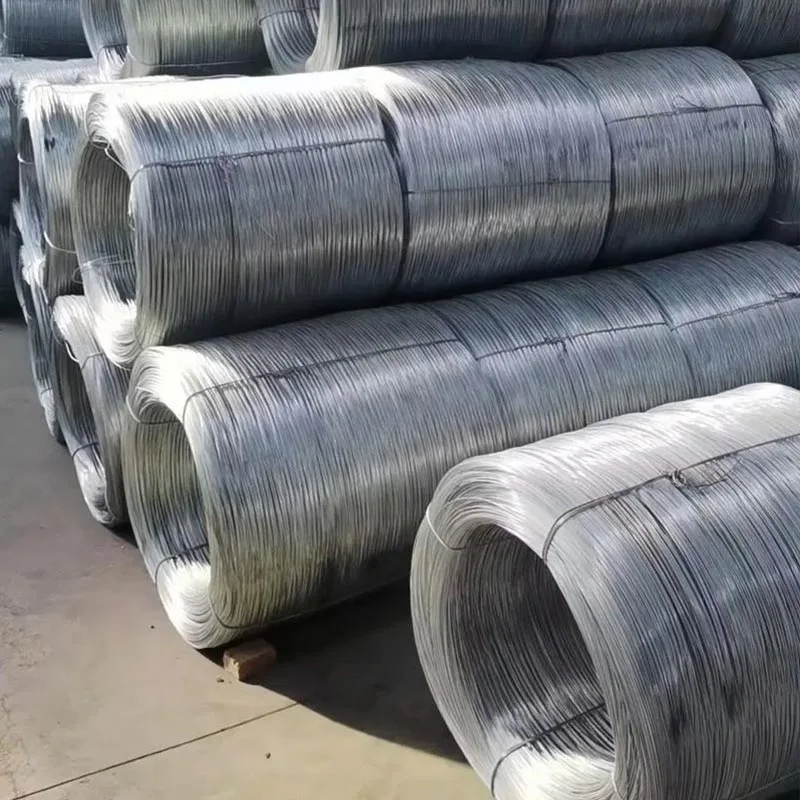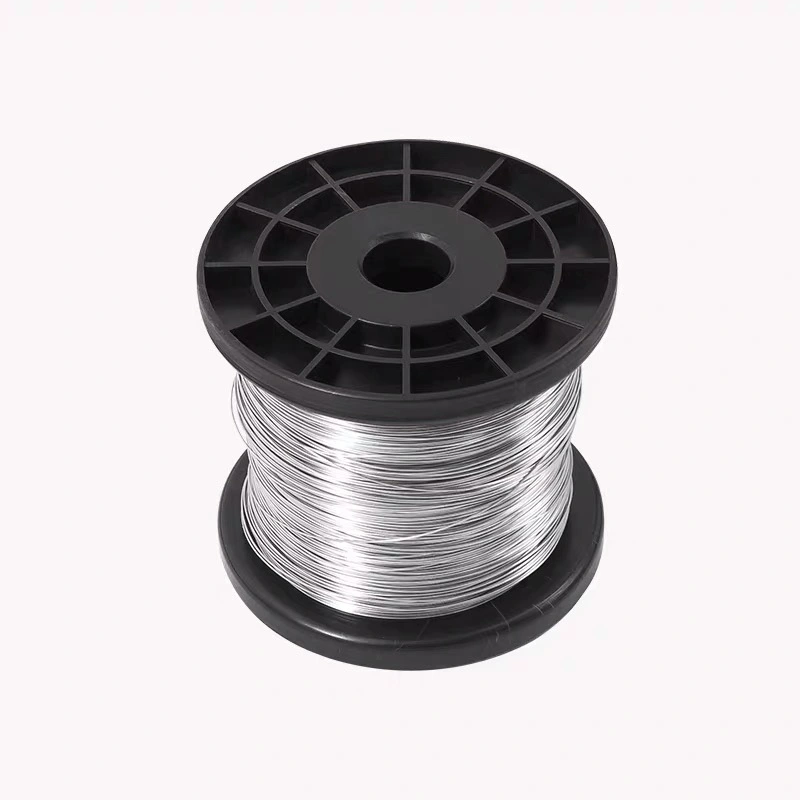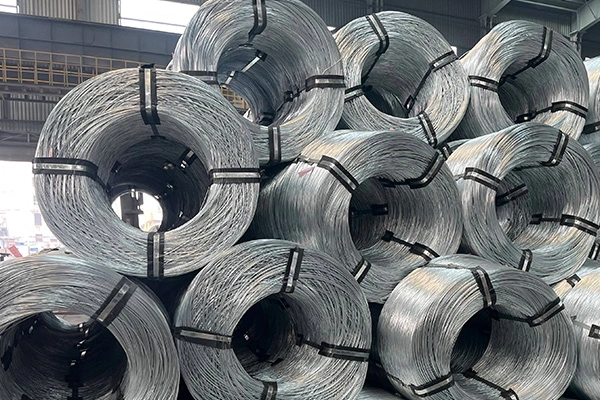
YS STEEL manufactures galvanized steel wire from high-quality low-carbon and high-carbon steel wire rod, drawn to exact diameters and then coated with a uniform zinc layer using either hot-dip or electro-galvanizing processes. The resulting wire is suitable for applications ranging from agricultural fencing and construction binding to armoring for electrical cables and ACSR core wire. Every coil leaving the YS STEEL facility is inspected for diameter tolerance, zinc coating mass, tensile strength, elongation, and surface quality before packaging for domestic or export shipment.
Hot-dip galvanized steel wire is produced by passing cleaned wire through a molten zinc bath at approximately 450°C to 460°C. This creates a metallurgical bond and a thicker coating, often between 40 and 350 g/m², which provides long-term corrosion protection in outdoor environments. Electro-galvanized steel wire uses an electrolytic process to apply a thinner, more uniform zinc layer, typically 8 to 30 g/m², and is favored when smooth surface finish or precise dimensions are critical. YS STEEL offers both types and can recommend the most economical option based on the expected service environment and processing requirements.
YS STEEL manufactures galvanized steel wire in diameters from 0.15 mm to 8.0 mm. The baseline specifications are listed below, and custom values can be produced for specific orders.
YS STEEL begins every production run with incoming wire rod inspection. The rod is checked for chemical composition, surface defects, and dimensional accuracy before being issued to the drawing line. The rod is then mechanically descaled and pickled in hydrochloric acid to remove mill scale, followed by water rinsing and phosphate or borax coating to prepare the surface for drawing.
Drawing reduces the wire to the target diameter through a series of tungsten carbide or diamond dies. For low-carbon galvanized steel wire, intermediate annealing may be performed to restore ductility. For high-carbon wire, patenting is used to achieve the required tensile strength before final drawing. YS STEEL controls drawing speed, die geometry, and lubrication to maintain consistent diameter and surface quality.
After drawing, the wire is fluxed and passed through the zinc bath. For hot-dip galvanizing, the zinc bath temperature and immersion time are continuously monitored. Wipe pads or nitrogen wiping systems control coating thickness. The wire is then cooled in water and wound onto coils. For electro-galvanized wire, the drawing line is coupled with an electroplating section where zinc is deposited from an electrolyte solution. Current density and bath chemistry are controlled to ensure uniform coating thickness.
Each coil is tested before release. YS STEEL uses micrometer measurement, tensile testing machines, coating mass tests, wrapping tests, and visual inspection to verify compliance. The mill test certificate records the actual values for diameter, tensile strength, elongation, zinc coating mass, and standard references. Third-party inspection by SGS, BV, or equivalent agencies is accepted before shipment.
A: Hot-dip galvanized steel wire is immersed in a molten zinc bath at about 450°C to 460°C, forming a zinc-iron alloy layer and a relatively thick outer zinc layer. Typical coating mass ranges from 40 to 350 g/m², which gives excellent corrosion resistance and is preferred for outdoor fencing, gabions, and construction. Electro-galvanized steel wire is coated in an electroplating bath at room temperature, producing a thinner layer of 8 to 30 g/m² with a bright, smooth surface. It is better suited for indoor or light-duty applications where precise dimensions and appearance matter. YS STEEL can provide both types based on the application.
A: For outdoor fencing in normal rural or suburban environments, YS STEEL recommends a minimum zinc coating of 60 g/m². In humid or industrial areas, choose 90 to 120 g/m². Coastal environments require at least 180 g/m² to prevent premature corrosion from salt spray. Heavier coatings up to 245 or 350 g/m² are used for gabions, retaining walls, and cable armoring where long service life is critical. The correct coating weight should balance initial cost with replacement and maintenance expenses over 10 to 20 years.
A: Yes. YS STEEL accepts custom orders for diameter from 0.15 mm to 8.0 mm, with diameter tolerance as tight as ±0.01 mm. Tensile strength can be adjusted between 300 MPa and 1800 MPa by selecting low-carbon or high-carbon steel rod and controlling drawing and heat treatment steps. Coil weight can be produced from 50 kg to 1000 kg, and packing can be adapted to client specifications. Send a drawing or technical datasheet, and YS STEEL will confirm the feasibility and provide a quotation.
A: YS STEEL products comply with ASTM A641 for zinc-coated carbon steel wire, ASTM B498 for zinc-coated steel core wire used in overhead electrical conductors, EN 10244-2 for zinc and zinc alloy coatings on steel wire, GB/T 343 for general purpose galvanized low-carbon steel wire, and ISO 7989 for zinc coatings on steel wire. Third-party inspection by SGS, BV, or equivalent agencies is accepted before shipment.
A: Standard export packaging uses a layer of plastic film directly against the coil, followed by waterproof hessian cloth and steel strip ties. Coils are placed on wooden pallets or in fiber drums for small diameters. For overseas container loading, YS STEEL uses desiccant bags and corner protectors to prevent moisture damage and coil deformation. Custom packaging such as carton boxes, plywood cases, or eye-to-wall coil configuration is available on request.
A: Store coils in a dry, ventilated warehouse away from direct rain and condensation. Keep the packaging intact until use. If coils must be stored outdoors, cover them with waterproof tarps and keep them off the ground on pallets. White rust occurs when moisture is trapped between layers of zinc coating in the absence of airflow; using desiccant bags and avoiding temperature swings can reduce this risk. Minor white rust does not usually affect mechanical strength, but heavy white rust can reduce coating life.