Article Summary: Diamond Pattern Steel Plate for Industrial applications provides a practical combination of surface traction, structural strength, and fabrication flexibility for demanding industrial environments. YS STEEL supplies diamond-patterned steel plates in Q235B and Q355B grades, with options for different thicknesses, dimensions, and surface patterns. Understanding material grades, plate thickness, installation conditions, and corrosion protection helps engineers, contractors, and procurement teams select the right steel plate for industrial flooring, walkways, stair treads, equipment platforms, and other load-bearing applications.
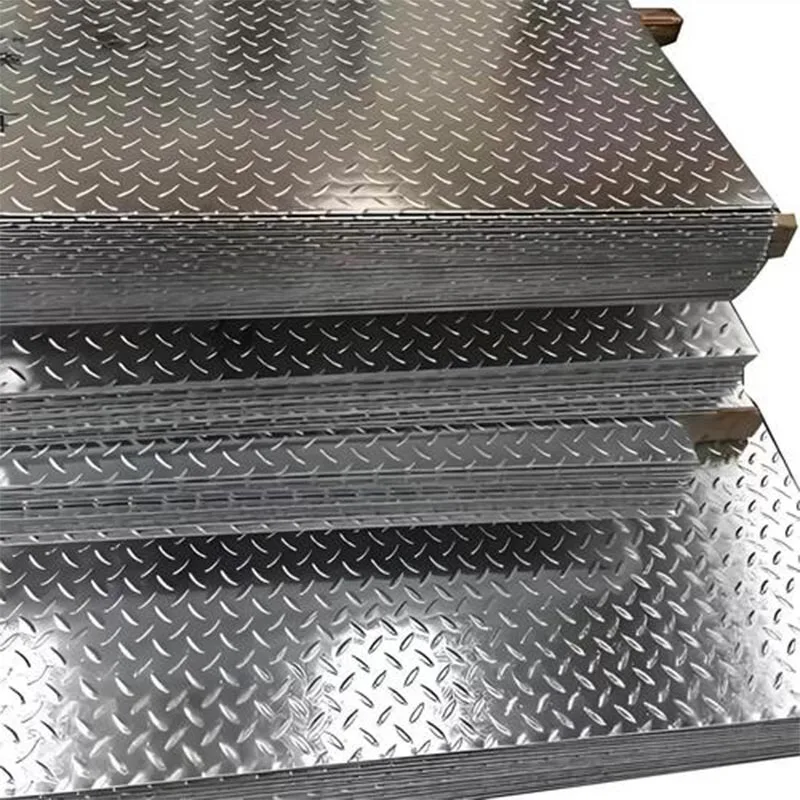
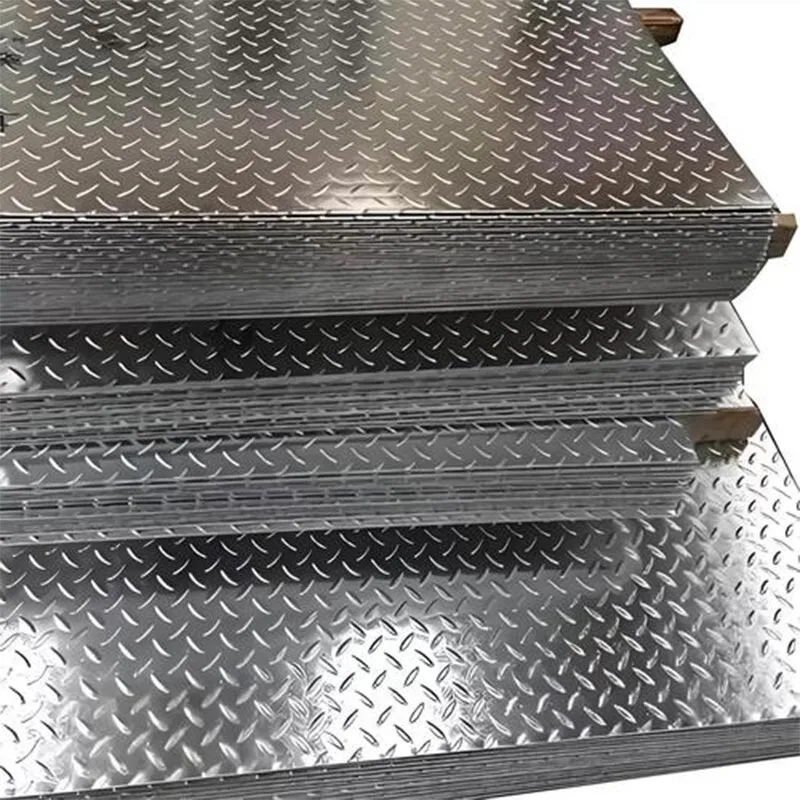
Diamond Pattern Steel Plate for Industrial use is a flat steel product featuring raised diamond-shaped projections on one surface. Commonly known as diamond plate, checker plate, or tread plate, it is designed to provide improved traction compared with a smooth steel surface while retaining the strength and fabrication characteristics required for industrial construction.
YS STEEL manufactures and supplies patterned steel plates for applications where reliable footing, durable flooring, and practical installation are important. The product range includes Q235B and Q355B carbon structural steel grades, with diamond, lentil-shaped, and round-bean patterns available according to project requirements.
Unlike a separate anti-slip coating, a conventionally hot-rolled tread pattern is formed as part of the steel plate itself. This integrated surface helps avoid the problem of a separately bonded tread layer peeling away, although the plate still requires appropriate inspection and maintenance throughout its service life.
For additional product details, visit the YS STEEL Diamond Pattern Steel Plate for Industrial product page.
Industrial facilities often experience continuous foot traffic, material handling, vibration, and contact with machinery. Selecting the right patterned steel plate can help address these conditions while simplifying floor construction and maintenance.
The raised pattern creates additional surface texture for footwear and certain wheeled equipment. It can help reduce the likelihood of slipping on industrial walkways, stair treads, loading platforms, and maintenance access areas. Actual traction depends on the pattern, contamination, footwear, drainage, and maintenance conditions.
The steel substrate provides the primary structural capacity. Depending on the selected grade, thickness, support spacing, and installation design, patterned plates can be used in flooring assemblies, equipment platforms, and access structures. Engineers should calculate the required load capacity rather than assuming that a raised pattern automatically makes a plate suitable for every heavy-duty application.
Steel tread plates can withstand repeated contact, routine movement, and normal industrial wear when appropriately specified. Because the pattern is integrated into the plate during rolling, it does not rely on a separately bonded anti-slip layer.
Patterned steel plates can generally be cut, welded, drilled, bent, and trimmed using suitable fabrication methods. This flexibility allows contractors to prepare flooring panels, stair treads, protective covers, and equipment bases for different installation layouts.
Choosing the correct thickness and steel grade helps balance initial material costs against structural requirements, maintenance, and replacement frequency. Appropriate surface protection and installation practices can further improve service life, particularly in outdoor or corrosive environments.
Diamond Pattern Steel Plate for Industrial projects is used in facilities where a textured steel surface offers practical advantages. The following applications illustrate common uses.
For projects involving several operating conditions, the best selection depends on expected loads, traffic frequency, moisture exposure, cleaning methods, and the required service life. A plate suitable for a dry indoor walkway may not be the most economical choice for a coastal loading platform.
Steel grade selection affects strength, fabrication, cost, and the suitability of the finished assembly. YS STEEL offers Q235B and Q355B patterned steel plates for different industrial requirements.
Q235B is a carbon structural steel grade commonly selected for general-purpose industrial applications. It can be a practical option for factory walkways, warehouse flooring, stair treads, and platforms where the calculated loads are compatible with the material's properties.
Its combination of strength, ductility, and fabrication suitability makes it worth considering for projects where reliable performance and material cost must be balanced.
Q355B is a higher-strength structural steel grade that can be considered for more demanding applications. Potential uses include heavy-duty platforms, port facilities, equipment support structures, and areas subject to substantial mechanical loads.
However, higher material strength alone does not establish the load capacity of a finished floor or platform. Plate thickness, unsupported span, support arrangement, connections, impact loads, and applicable design codes remain essential.
| Comparison Factor | Q235B | Q355B |
|---|---|---|
| Material category | Carbon structural steel | Higher-strength structural steel |
| Common selection purpose | General industrial applications | More demanding structural applications |
| Typical project examples | Walkways, stairs, warehouse flooring | Heavy-duty platforms, equipment support assemblies |
| Strength consideration | Specified grade properties and design loads | Higher specified yield strength, subject to applicable standard |
| Fabrication considerations | Confirm welding, bending, and cutting requirements | Confirm grade-specific welding procedures and forming requirements |
| Cost consideration | Evaluate for conventional load requirements | Evaluate when higher strength provides a project benefit |
Selection tip: Request the applicable material standard and mill test documentation before comparing grades. Yield strength values depend on the governing specification and may vary with product thickness. Do not substitute a nominal grade comparison for a project-specific engineering assessment.
Before ordering Diamond Pattern Steel Plate for Industrial use, buyers should confirm the dimensions, material, pattern, and applicable standard. These details help ensure that the delivered product matches the intended application.
| Specification | YS STEEL Product Information | What Buyers Should Confirm |
|---|---|---|
| Material grade | Q235B and Q355B | Exact grade and material certificate requirements |
| Base thickness | 2.0–12.0 mm | Required thickness, tolerance, and design loads |
| Standard width | 1000 mm, 1260 mm, and 1500 mm | Available width and any project-specific dimensions |
| Length | Custom fixed lengths | Required panel dimensions and cutting tolerances |
| Surface pattern | Diamond, lentil, and round-bean patterns | Pattern style and required surface characteristics |
| Applicable standards | GB/T 3277, ASTM A786, EN 10025, and JIS G3101 are listed on the product page | Exact governing standard and its applicability to the ordered product |
| Surface protection | Confirm available options with the supplier | Painting, galvanizing, or another suitable corrosion-control system |
| Quality documentation | Discuss documentation and inspection arrangements with the supplier | Mill test certificates, dimensional inspection, and agreed testing |
Important thickness note: The listed 2.0–12.0 mm range refers to the base plate thickness, excluding the raised pattern. Buyers should specify the base thickness explicitly to avoid confusion when calculating weight, clearances, and installation dimensions.
For international procurement, do not assume that every standard listed is interchangeable with the others. Confirm the exact product specification, grade designation, dimensional tolerances, and acceptance criteria in the purchase order.
Correct fabrication and installation are essential for achieving the intended performance of patterned steel flooring. Even a high-quality plate can create safety or structural problems if it is poorly supported, incorrectly fixed, or installed without appropriate drainage.
For industrial platforms and walkways, the supporting structure must be designed for the anticipated static and dynamic loads. Plate span, support spacing, fastening method, and joint details should be confirmed before installation.
Outdoor installations also require consideration of water drainage, corrosion protection, thermal movement, and maintenance access. Raised patterns can improve traction, but they do not eliminate slip risks caused by oil, grease, ice, or other contaminants.
Carbon steel can corrode when exposed to moisture, oxygen, salts, or aggressive chemicals. The appropriate protection method depends on the operating environment, expected service life, and maintenance plan.
| Operating Environment | Protection Consideration | Maintenance Priority |
|---|---|---|
| Dry indoor workshop | Suitable mill finish or a specified protective coating | Inspect for damage and localized rust |
| Humid warehouse | Protective coating appropriate to humidity and condensation | Check joints, edges, and water-trapping areas |
| Outdoor industrial platform | Consider a suitable paint system or galvanizing | Inspect coating condition and drainage |
| Coastal or marine environment | Use a corrosion-control system designed for salt exposure | Monitor coating breakdown and corrosion at connections |
| Chemical processing area | Verify compatibility with the specific chemicals and concentrations | Follow a site-specific inspection and cleaning schedule |
For demanding environments, corrosion protection should be specified before production. Coating selection, surface preparation, weld treatment, and edge protection all affect the performance of the completed installation.
Galvanizing or painting can improve corrosion resistance, but neither should be treated as a universal solution. The selected system must suit the exposure conditions and the maintenance capabilities of the facility.
Industrial steel procurement involves more than comparing the price per ton. A complete specification helps suppliers quote accurately and reduces the likelihood of delivery discrepancies or costly site modifications.
Use the following checklist when preparing a request for quotation:
For larger projects, it is also helpful to approve a representative sample or detailed technical specification before mass production. This is particularly important when multiple plates must fit together or maintain a consistent pattern across an installation.
It is commonly used for industrial flooring, stair treads, walkways, access platforms, loading areas, vehicle floors, and selected equipment support applications. The final use depends on the plate grade, thickness, support design, and operating environment.
Q235B is commonly selected for general-purpose structural applications, while Q355B offers higher specified yield strength and may suit more demanding load-bearing requirements. The appropriate grade should be selected according to engineering calculations, the governing material standard, and the project budget.
No. For the YS STEEL product specifications listed on the product page, the 2.0–12.0 mm thickness range refers to the base steel plate and excludes the raised pattern. Confirm the measurement convention and applicable tolerances in the purchase order.
Yes. YS STEEL lists standard widths of 1000 mm, 1260 mm, and 1500 mm, together with custom fixed-length options. Buyers should confirm the requested dimensions, available patterns, tolerances, and any additional fabrication services before ordering.
No steel flooring should be described as completely slip-proof. Raised patterns can improve traction compared with smooth surfaces, but performance varies with contamination, moisture, footwear, and maintenance. Additional drainage, cleaning, or safety measures may be necessary in demanding conditions.
Yes, provided the material, structural design, and corrosion protection are suitable for the environment. Carbon steel may require painting, galvanizing, or another specified protective system in humid, coastal, or chemically aggressive conditions.
Provide the required grade, governing standard, base thickness, width, length, pattern type, quantity, surface protection, processing requirements, delivery destination, and inspection documentation requirements. Complete specifications help suppliers evaluate availability, production requirements, and total procurement costs.
Diamond Pattern Steel Plate for Industrial applications offers a practical combination of surface traction, structural versatility, and fabrication flexibility. Selecting the right grade, base thickness, pattern, and corrosion protection is essential to achieving dependable performance in factories, warehouses, access platforms, stairways, and outdoor industrial facilities.
YS STEEL provides Q235B and Q355B patterned steel plate options, with different surface patterns and dimensional choices for industrial procurement requirements. By confirming technical specifications, inspection requirements, and installation conditions before ordering, buyers can make better-informed decisions and reduce avoidable project costs.
Looking for a dependable steel plate supplier for your next industrial project? Visit the YS STEEL product page to review the available specifications. For technical guidance, customized dimensions, bulk purchasing, or a project-specific quotation, contact us today to discuss your requirements and find a suitable diamond pattern steel plate solution for your application.