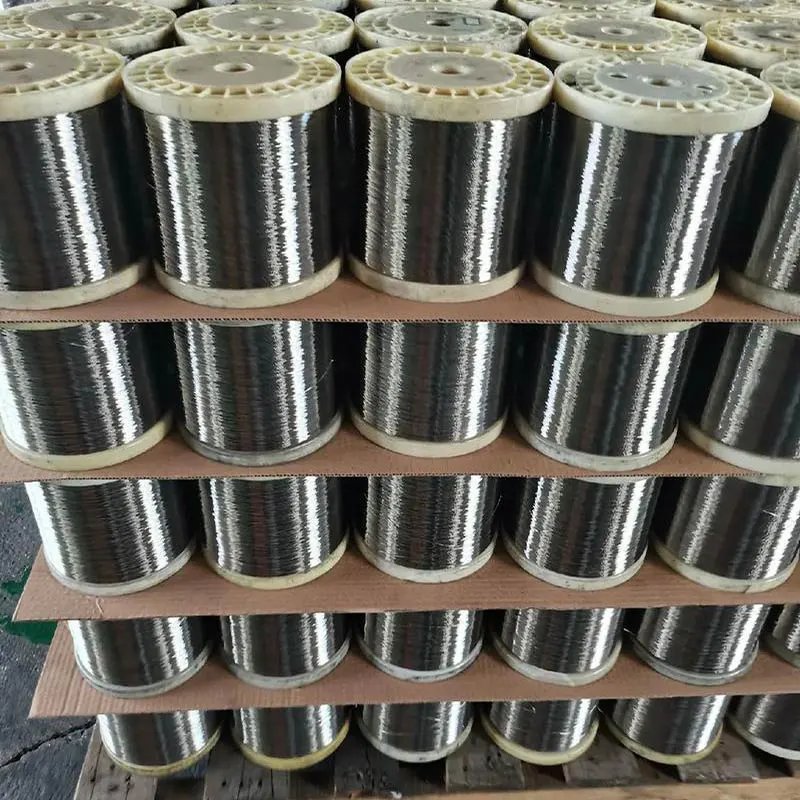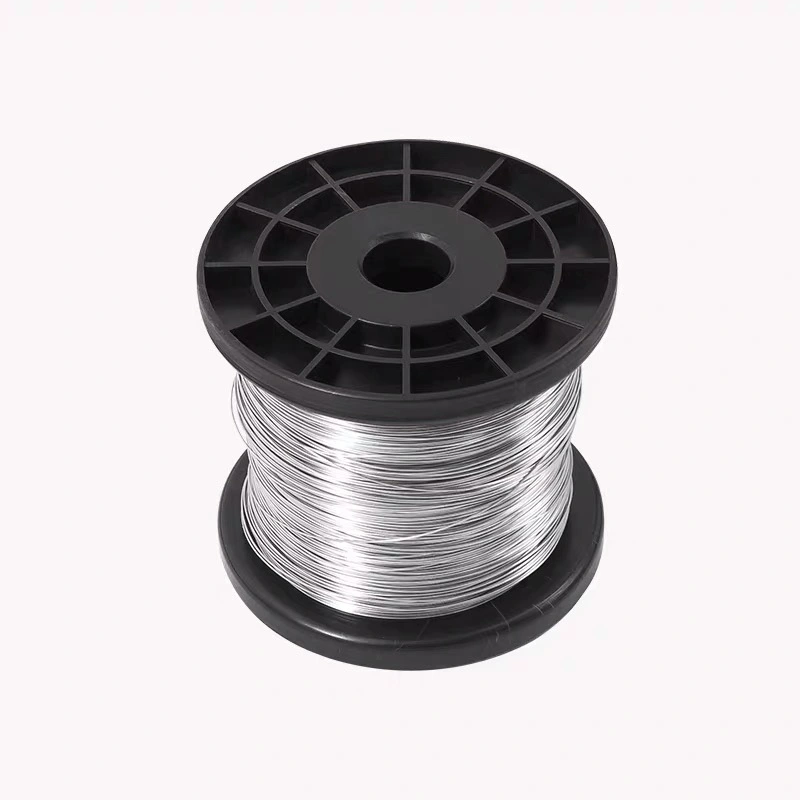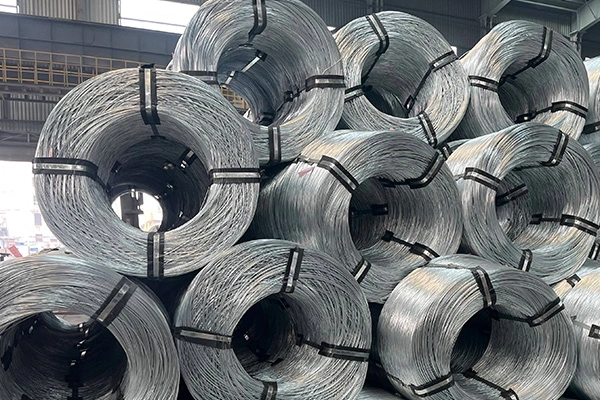
YS STEEL manufactures stainless steel wire using carefully selected rod feedstock from ISO 9001-certified mills. Every coil passes through a controlled drawing and annealing process to achieve the required diameter, temper, and surface condition. The result is a product that performs reliably in marine environments, chemical processing lines, food equipment, medical devices, automotive exhaust systems, and architectural rigging.
Key advantages of YS STEEL stainless steel wire include:
Different stainless steel wire grades offer distinct balances of corrosion resistance, strength, formability, and cost. YS STEEL stocks and custom-draws the most widely specified grades for industrial use. The table below summarizes the core chemical composition ranges for common grades.
| Grade | Chromium (%) | Nickel (%) | Molybdenum (%) | Carbon Max (%) | Key Feature |
|---|---|---|---|---|---|
| 304 | 18.0 – 20.0 | 8.0 – 10.5 | – | 0.08 | General-purpose corrosion resistance |
| 304L | 18.0 – 20.0 | 8.0 – 12.0 | – | 0.03 | Better weldability, reduced sensitization |
| 316 | 16.0 – 18.0 | 10.0 – 14.0 | 2.0 – 3.0 | 0.08 | Superior resistance to chlorides and acids |
| 316L | 16.0 – 18.0 | 10.0 – 14.0 | 2.0 – 3.0 | 0.03 | Marine-grade corrosion performance |
| 310S | 24.0 – 26.0 | 19.0 – 22.0 | – | 0.08 | High-temperature oxidation resistance |
| 321 | 17.0 – 19.0 | 9.0 – 12.0 | – | 0.08 | Stabilized with titanium for heat resistance |
| 430 | 16.0 – 18.0 | – | – | 0.12 | Ferritic, magnetic, economical |
| 904L | 19.0 – 23.0 | 23.0 – 28.0 | 4.0 – 5.0 | 0.02 | High alloy for aggressive acid environments |
| 2205 Duplex | 22.0 – 23.0 | 4.5 – 6.5 | 3.0 – 3.5 | 0.03 | High strength with excellent stress-corrosion resistance |
YS STEEL draws stainless steel wire to precise diameters suitable for spring coiling, weaving, cold heading, and fine mechanical applications. The standard production range is listed below.
The following table shows typical tolerances for several diameter bands used in spring and mesh production.
| Diameter Range (mm) | Standard Tolerance (mm) | Ovality Max (mm) | Typical Applications |
|---|---|---|---|
| 0.02 – 0.10 | ±0.002 | 0.002 | Medical guidewires, precision filters |
| 0.10 – 0.50 | ±0.005 | 0.005 | Springs, wire mesh, jewelry |
| 0.50 – 2.00 | ±0.010 | 0.010 | Fasteners, spokes, conveyor belts |
| 2.00 – 6.00 | ±0.020 | 0.020 | Cold heading wire, shaft wire |
| 6.00 – 16.00 | ±0.050 | 0.050 | Heavy springs, structural wire |
Tensile strength, hardness, and elongation are tailored through controlled cold working and annealing. YS STEEL offers the following temper designations to match specific forming and performance requirements.
Typical mechanical property ranges for several grades are shown below.
| Grade | Tensile Strength (MPa) | Elongation (%) | Hardness (HV) |
|---|---|---|---|
| 304 soft annealed | 520 – 720 | 35 – 55 | 150 – 190 |
| 304 full hard | 1250 – 1750 | 1 – 4 | 380 – 500 |
| 316 soft annealed | 515 – 690 | 35 – 50 | 145 – 185 |
| 316 spring temper | 1400 – 1900 | 1 – 3 | 420 – 530 |
| 430 annealed | 450 – 600 | 20 – 30 | 130 – 170 |
| 2205 duplex | 780 – 1000 | 15 – 25 | 230 – 290 |
YS STEEL ships stainless steel wire with the documentation required for critical applications. Standard quality assurance measures include:
Proper packaging preserves wire surface quality and ensures smooth unwinding during production. YS STEEL offers standard and customized packaging formats.
The combination of corrosion resistance, strength, and formability makes stainless steel wire suitable for a wide range of industries.
Q: What is the difference between 304 and 316 stainless steel wire?
A: The main difference is molybdenum content. 316 stainless steel wire contains 2.0% to 3.0% molybdenum, which significantly improves resistance to chlorides, saltwater, and many industrial acids. 304 stainless steel wire is more economical and works well in mild atmospheric and food contact environments. YS STEEL recommends 316 or 316L for marine exposure, coastal architecture, chemical processing, and any application with frequent exposure to saline solutions or aggressive cleaning chemicals.
Q: How do I choose the right temper for stainless steel wire?
A: Temper selection depends on the forming method and the final performance required. If the wire will be heavily bent, welded, or cold-headed, a soft annealed or 1/4 hard temper is usually best. For spring applications, 1/2 hard to spring temper provides the tensile strength needed to resist permanent set. YS STEEL technical engineers can recommend a starting temper and adjust cold working ratios to achieve a target tensile range while maintaining consistent elongation and fatigue life.
Q: Can YS STEEL supply custom diameters and non-standard coil weights?
A: Yes. YS STEEL custom-draws stainless steel wire to non-standard diameters within the 0.02 mm to 16 mm range. Custom coil weights, spool dimensions, and cut lengths can be arranged to fit specific machinery or assembly line requirements. Minimum order quantities depend on the grade, diameter, and finish, but flexible production planning allows for both small-batch trials and high-volume supply agreements.
Q: What surface finish should I choose for drawing, coating, or soldering?
A: For general drawing and forming, bright finish provides low friction and good visual quality. If the wire will be painted, bonded, or coated, a matte finish offers better adhesion. For soldering or electrical conductivity, nickel-coated stainless steel wire is often preferred. YS STEEL can provide surface roughness measurements and adhesion test data to help qualify the selected finish for your process.
Q: Is stainless steel wire magnetic?
A: It depends on the alloy family. Ferritic grades such as 430 and martensitic grades are magnetic. Austenitic grades like 304 and 316 are generally non-magnetic in the annealed condition, but cold working can make them partially magnetic. Duplex 2205 is magnetic due to its ferritic-austenitic microstructure. If magnetic response is critical, YS STEEL can supply a grade and processing route that meets the required permeability limit.